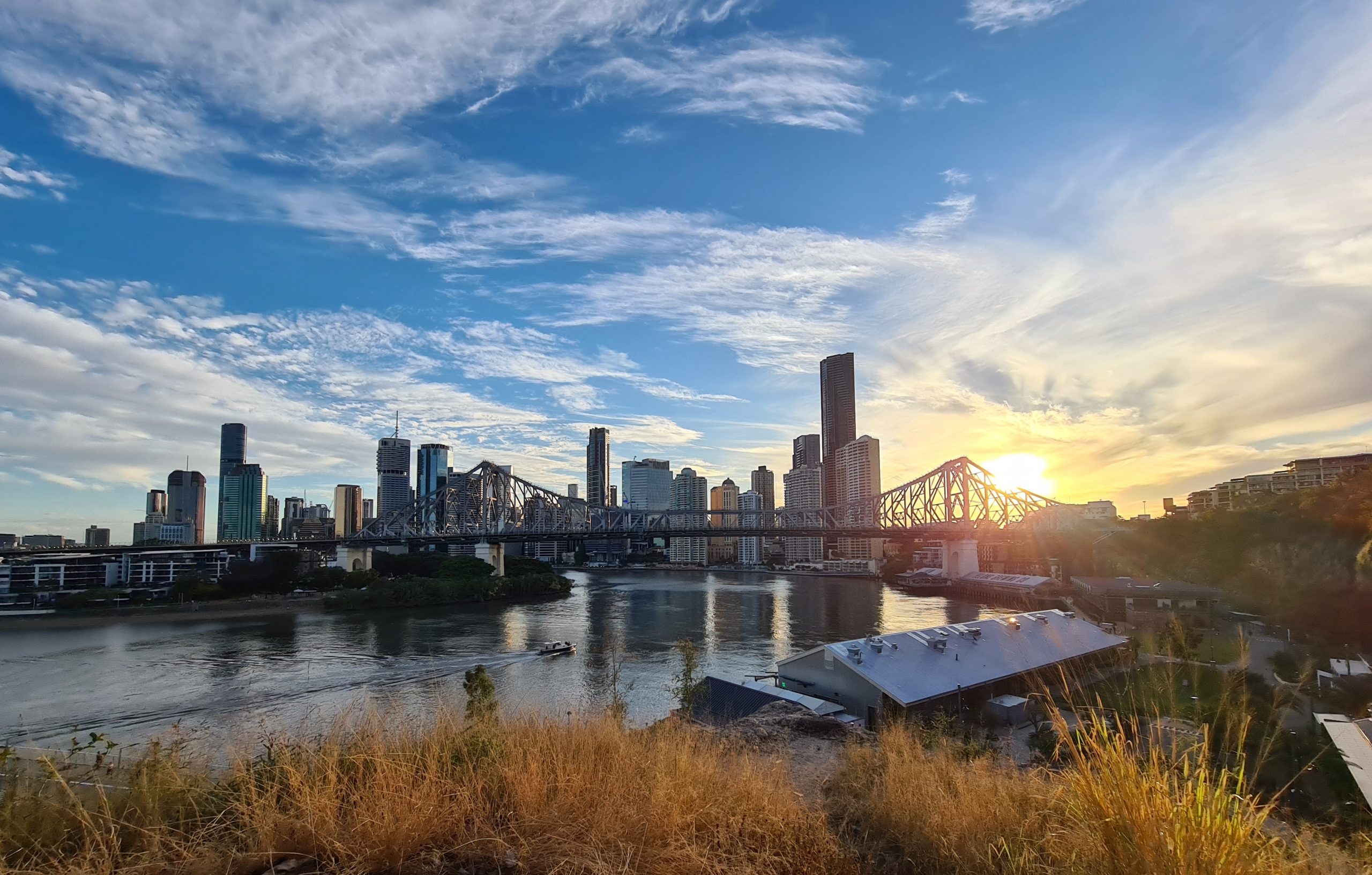

Brisbane’s property market is also feeling the impact of the national market correction, but its lifestyle appeal and 2032 Olympic Games preparations should ensure its resilience in the long term.
Cotality’s October Home Value Index (HVI) noted that Brisbane’s value declines for September were the highest of all our capital cities, dropping 1.5% to reach a median dwelling price of $1,048,880. This is a 5.4% decrease from a peak level of $1,126,149 in May.
In comparison, Sydney experienced a 1.4% monthly fall while Adelaide and Perth values weakened 1.3% and 1.2%, respectively.
Brisbane also experienced the sharpest downturn in annual sale volumes across our capital cities (-27.2%), followed by Sydney (-26.5%) and Perth (-24.2%)
Having said this, Cotality said national housing levels had eased while advertised properties had accumulated, despite a reduced number of new listings. This accumulation is partly due to properties now taking longer to sell. In the past year, median days on the market for capital city homes have increased from 23 to 39.
Meanwhile, Brisbane and Perth’s 2.1% vacancy rates are just behind Sydney’s 2.3% figure, while the city’s gross rental yield stands at 3.5% and year-on-year house rent increases remain at 6.7%.
None of these figures is too surprising for Brisbane, as it is the most prominent of our mid-sized capitals – the others being Adelaide and Perth – to achieve strong growth in the past few years. The city is also the largest of these capitals, so the correction was always going to be more intense.
Either way, Brisbane still has plenty to offer buyers and vendors, especially those who are prepared to act sooner rather than later.
Firstly, the Olympics city is expected to drive its popularity even higher with the $7.1 billion of new and upgraded venues planned for the event. Work on the new $3.8 billion Brisbane Stadium and National Aquatic Centre began in October 2025, while a new 63,000-seat stadium is also planned with a budget of $3.6 billion or more.
Four athlete villages, including one in Rockhampton in north Queensland, are also on the list of projects and will cost $3.5 billion
In addition, several major public transport projects are either underway or already completed in Brisbane. The $19 billion Cross River Rail development is expected to open in 2029, with the 10.2km underground train line featuring 5.9km twin tunnels beneath the Brisbane River and CBD and four new underground stations.
The $1.4 billion Brisbane Metro project opened to customers in 2025 and comprises a 21km transport network with electric buses running every five minutes.
It’s important to note that prior to Brisbane’s recent property corrections, the city experienced a sustained period of strong growth.
Cotality’s HVI show Brisbane’s annual median dwelling values grew 5.9% compared to Sydney and Melbourne’s -7% and -6.2% falls. In the same way, the past five years saw Brisbane experience a median dwelling uptick of 55.4%. Sydney only achieved a 1.9% increase while Melbourne’s values declined by -5.4%.
So, like Perth and Adelaide, Brisbane’s high-end growth in the long term should sustain it during its very recent downturns. While Spring is proving not to be the usual busy real estate season, we are also close to the bottom end of the national correction.
South-East Queensland’s property market may still experience some ups and downs, but overall, I expect Brisbane to enjoy good growth until the 2032 Olympics at least.
By John McGrath, Chief Executive Officer of McGrath Estate Agents.